Roadmap
Where QuadGuide is, what comes next, and what we are thinking about. The numbers are measured on our test set; we say where a result still falls short.
Works today
One-click remesh, checked
Press Remesh and every result is checked before you see it: all quads, no holes, nothing turned inside out, the same pieces and openings as your mesh, about the count you asked for. Three styles (Character, Sculpt / Scan, Hard Surface) set everything else.
| Stylized head, 3000 quads | Spot, 2000 quads |
|---|---|
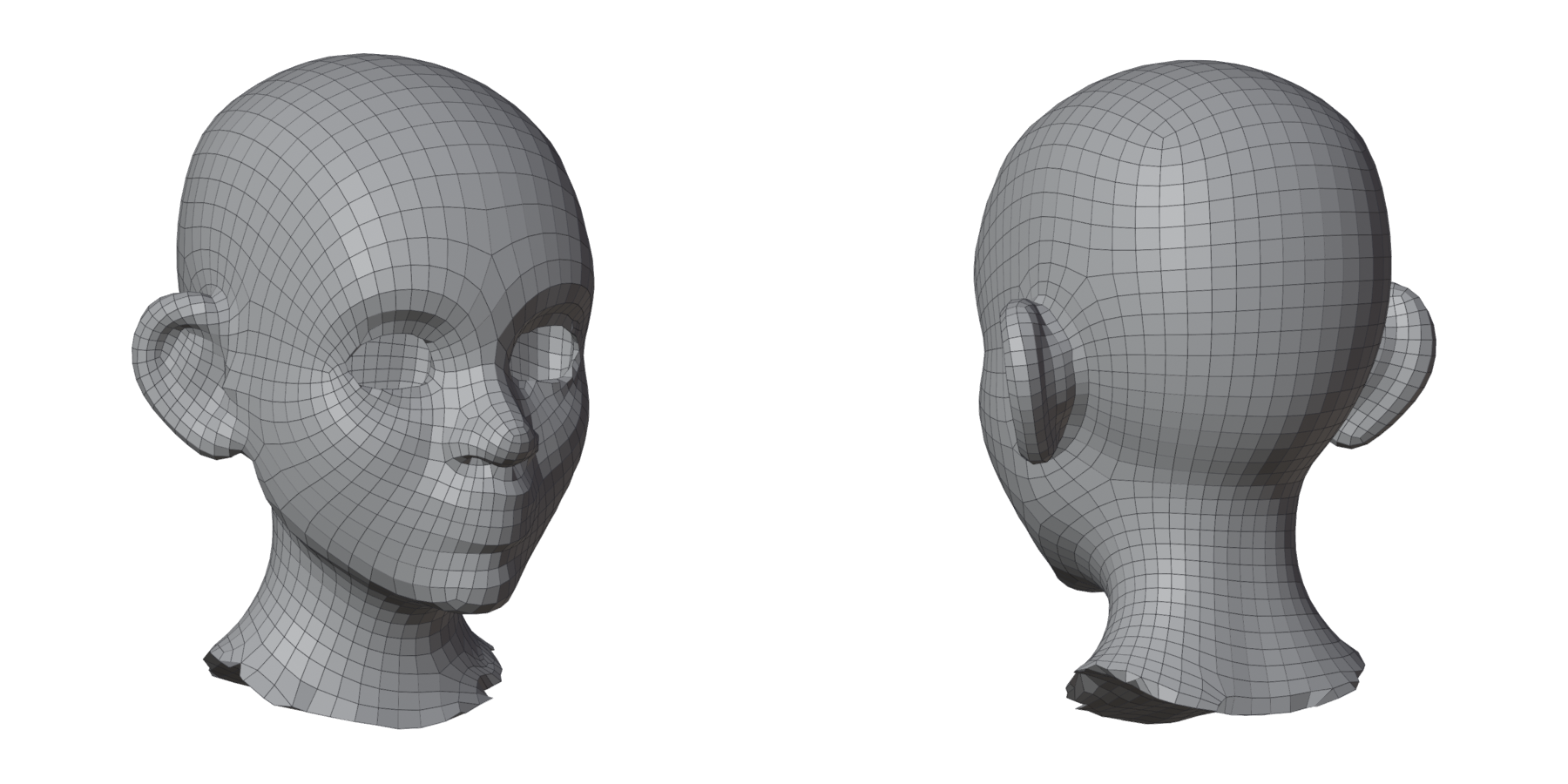 |
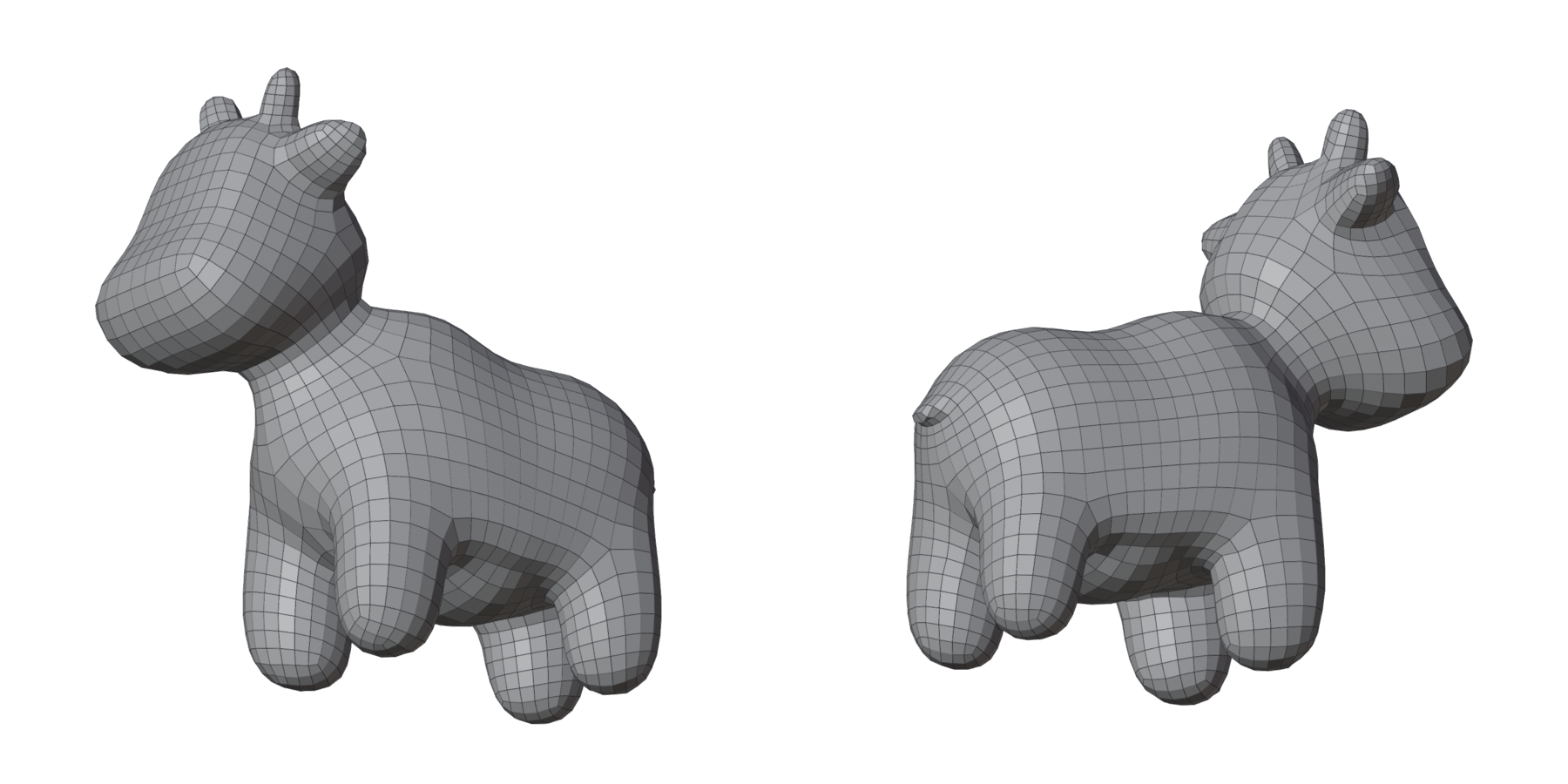 |
Guide lines become edge loops
Draw on the mesh and the remesh follows: a loop round each eye and the mouth becomes an edge loop, and with Fill Between each region between your lines gets its own patch of quads.
| Your guides | Fill Between on | Fill Between off |
|---|---|---|
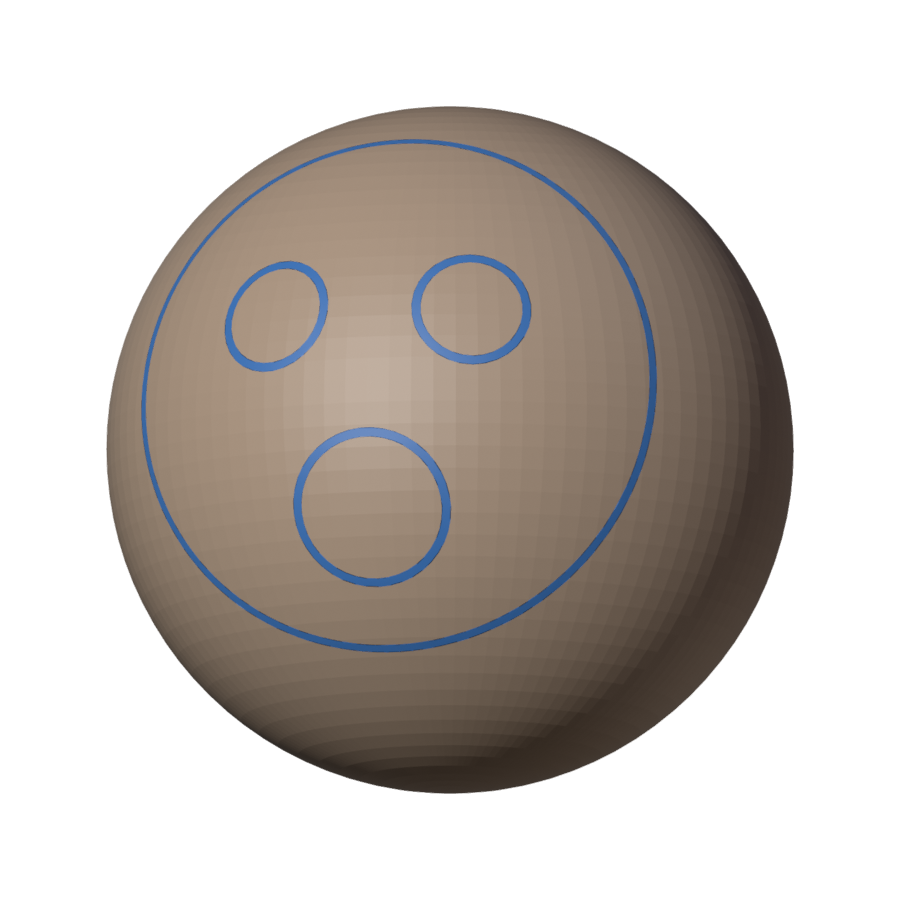 |
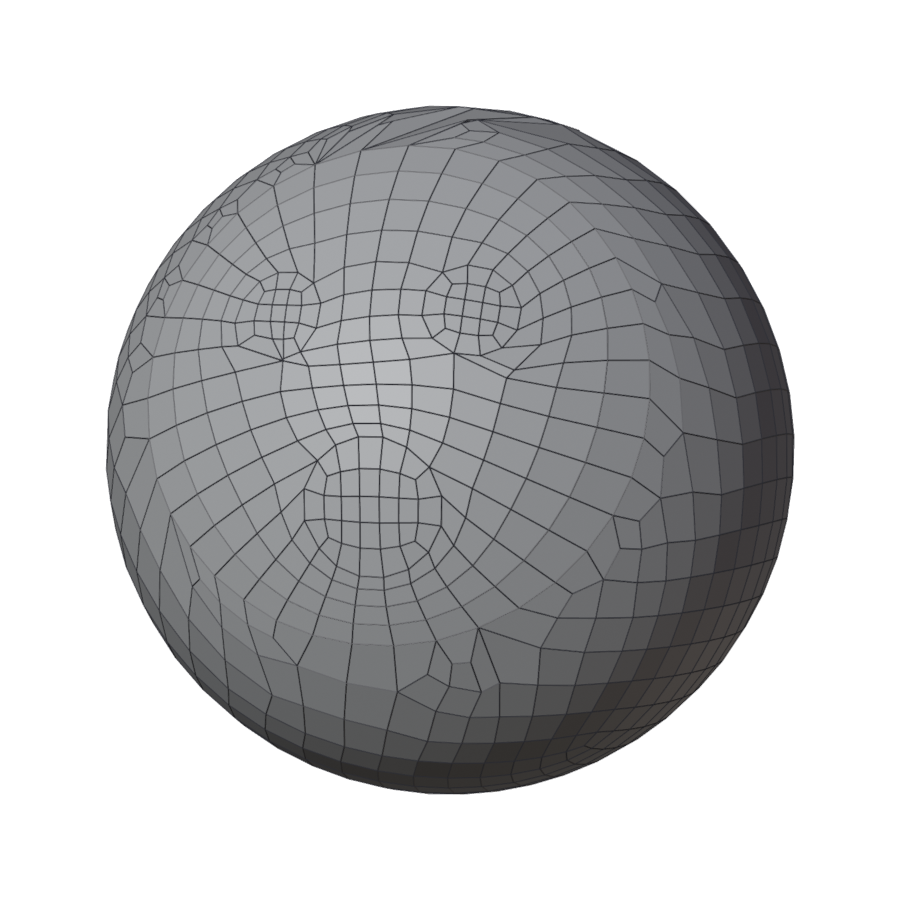 |
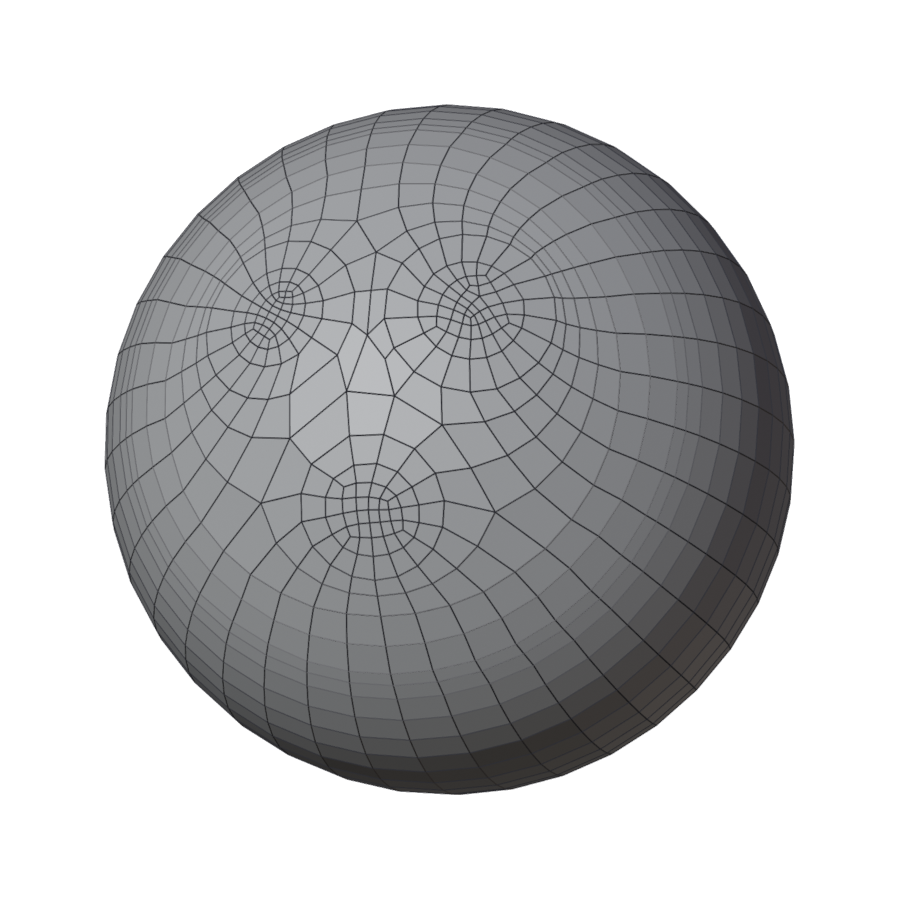 |
On the guided body tests, 96 % of the guide points end up within a fifth of a quad of an edge of the result.
A patch network you see before you remesh
With Fill Between, your lines are the borders of patches. While you draw, each region is coloured by the patch it makes, each line shows its edge count (which you can change), and thin lines sketch the rows of quads. The panel lists what keeps your drawing from filling, with a button to fix each, or Fix All. On a dense sculpt the overlay works on a lighter copy, so it keeps up with each stroke. When the patches cannot be used, the result says so and marks the places red.
Retopology tools
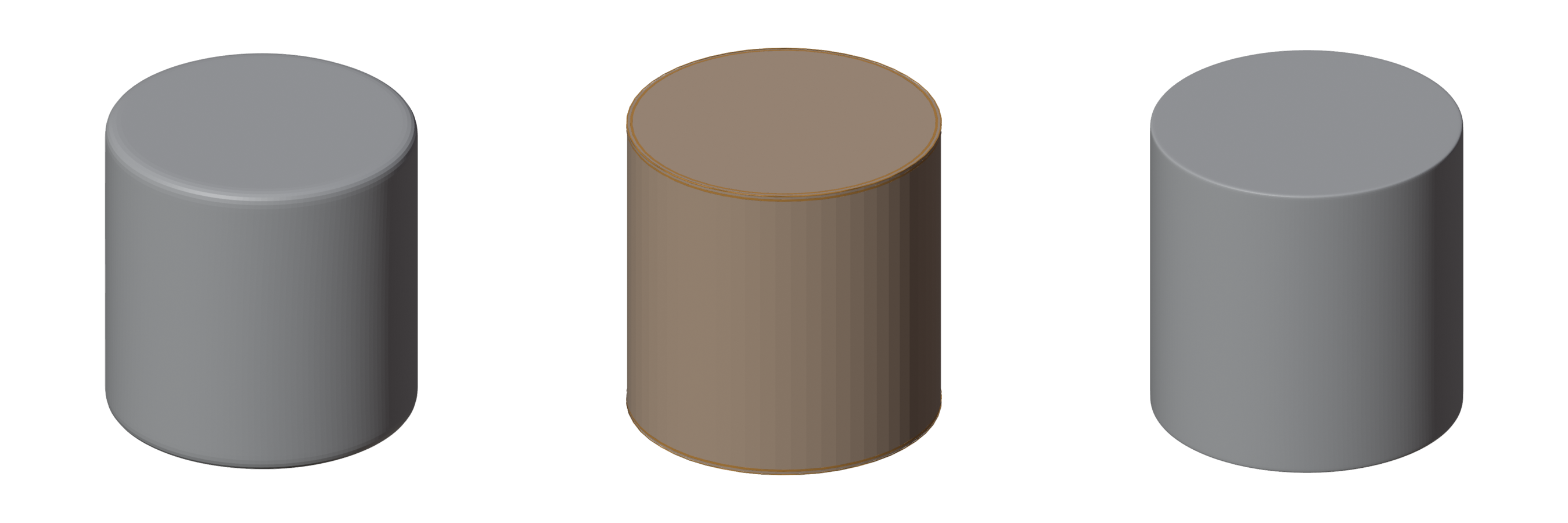
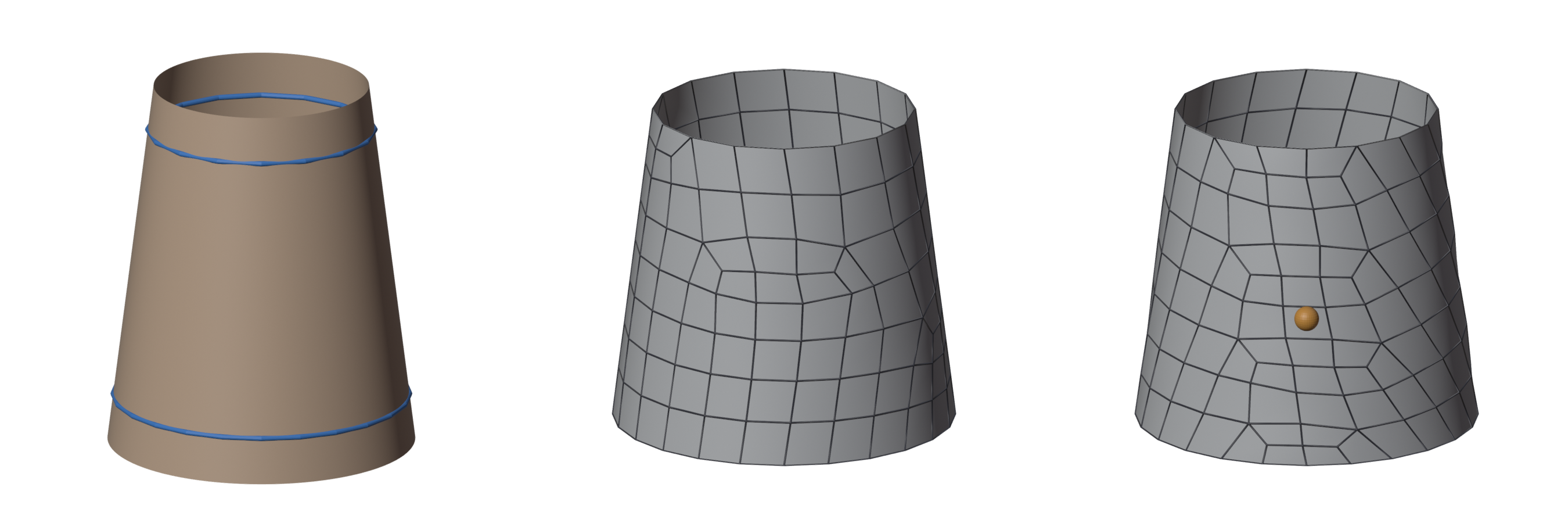
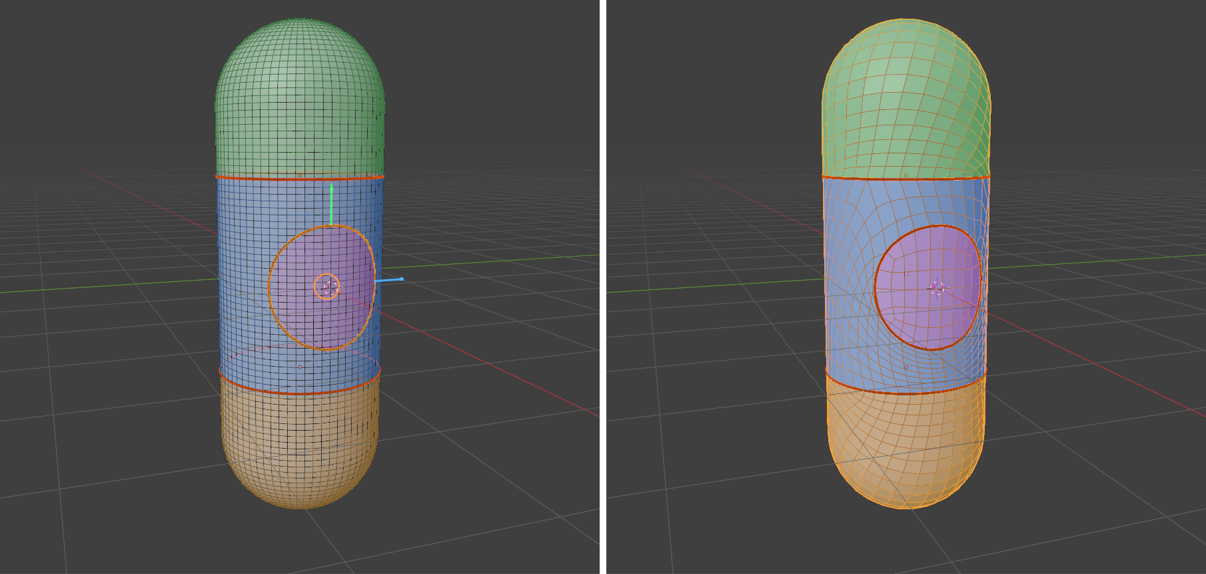
Holding Loops for edges that stay sharp under subdivision, Bridge Loops with count changes where you want them, Fill Hole, Remesh Selected Faces and Fill the Rest for a partial retopo, and Set Edge Count for loops that must match.
| Holding Loops | Bridge Loops 24 to 16 | Bands before and after |
|---|---|---|
 |
 |
 |
Density
Paint where quads should be smaller or larger; Join Touching for fingers and lips pressed together.
Next
What we are working on for 1.0 and right after, in order.
- Fewer quads to touch up. Two results in three are clean on our character test set; the rest have a handful of pinched quads at thin parts (ear rims, fingertips). The engine already refills them and retries; we want it to get there every time, so the card never has to say "a few quads may need a touch-up".
- Patches that fill the first time on faces. On a face drawn as loops, the fill can still fail where a patch reaches into a deep fold, such as the crease between the lips; then the remesh falls back and your layout is lost. We want such patches to fill as drawn, and, where one cannot, to remesh only that place instead of the whole mesh.
- Faster guided bodies. A remesh with guides on a dense sculpt is now about twice as fast as before (a 1.6-million-face sculpt: 69 s to 35 s). What is left is mostly the step that rounds the quad grid.
- Better and faster Symmetry. Today Symmetry remeshes the whole mesh with a line forced down the middle, then mirrors one half. Remeshing only the half is about three times faster on a head (35 s to 11 s) and gives a calmer flow down the face; we are getting its check to pass before it replaces the current way.
- Big meshes in parts, by itself. Very dense sculpts are cut into parts and remeshed part by part when that is faster, without a setting.
- Windows, macOS and Linux, as a Blender extension (4.2 and later).
Later
Ideas we want to try; none is promised.
- Loops for animation. Rings at the joints (elbows, knees, knuckles), loops round the eyes and mouth, placed for you on a character, as a starting point you edit.
- Edge counts that match across parts, so a head and a body remeshed apart join loop to loop.
- Guides from a reference. Start from the flow of a mesh you like (an older version, a base mesh) on a new sculpt.
- Levels of detail. One flow, several counts, the loops in the same places.
- UV seams along guides. A guide marked as a seam becomes a seam on the result.
- Hard surface in one click: bevels and holding loops placed along every hard edge.
Results log
The measurements behind this page, with what worked and what did not, are kept with the engine's test results. Each change is checked against a bar set before it is run, on the same models, and the pictures are looked at, not only the numbers.